IBASE Cybersecurity and Product Security
Building Security into Every Stage of the Product Lifecycle

As industrial systems, edge computing platforms, and connected devices become increasingly integrated, product cybersecurity has become a fundamental requirement for maintaining stable and resilient operations. IBASE incorporates cybersecurity throughout the product lifecycle, including requirements definition, secure design, development, verification and testing, vulnerability management, security updates, and end-of-life planning. We continually refine our management framework in line with international cybersecurity standards and European Union regulatory requirements.

Cybersecurity Foundations and Management Framework

▌Management System Foundations

To continuously strengthen product cybersecurity management, IBASE is advancing the following priorities:

  • Continue planning product security functions and specifications in alignment with the IEC 62443 framework and CRA requirements, with phased implementation across product lines.
  • Enhance supplier cybersecurity assessments and expand the review and approval mechanisms for third-party components.
  • Adjust preparations for technical documentation and conformity assessment in step with the publication of EU harmonised standards.
  • Continue expanding the mechanisms for publishing security advisories and receiving vulnerability reports.

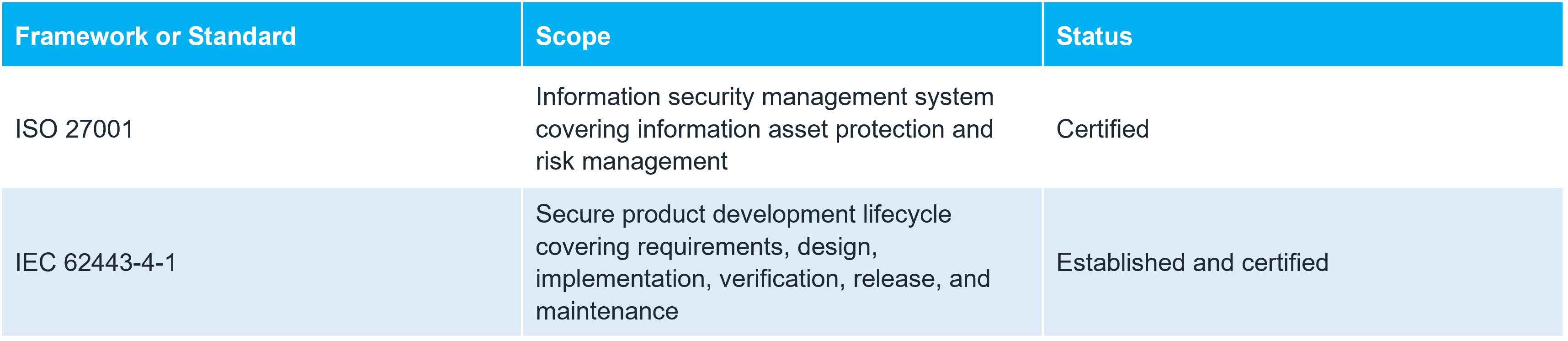
ISO 27001/IEC 62443-4-1

Certificates & Compliance Documents

European Union Cyber Resilience Act (CRA)

▌Overview

Products with digital elements made available on the European Union market are subject to the horizontal cybersecurity requirements of Regulation (EU) 2024/2847, the Cyber Resilience Act (CRA). The Act focuses on the following areas:

  • Security by design and secure by default: Manufacturers must identify and address cybersecurity risks during design and production. Products must be placed on the market with secure default configurations.
  • Supply chain management: Common requirements help reduce the risk that a single hardware or software vulnerability will cause a systemic cybersecurity incident. Manufacturers must manage known vulnerabilities and provide necessary security updates during the support period.
  • Disclosure obligations and market transparency: Manufacturers must provide security information and vulnerability reporting channels so users can make informed purchasing and usage decisions. They must also disclose the product's intended purpose, support period, and vulnerability reporting channel.

▌Implementation Timeline

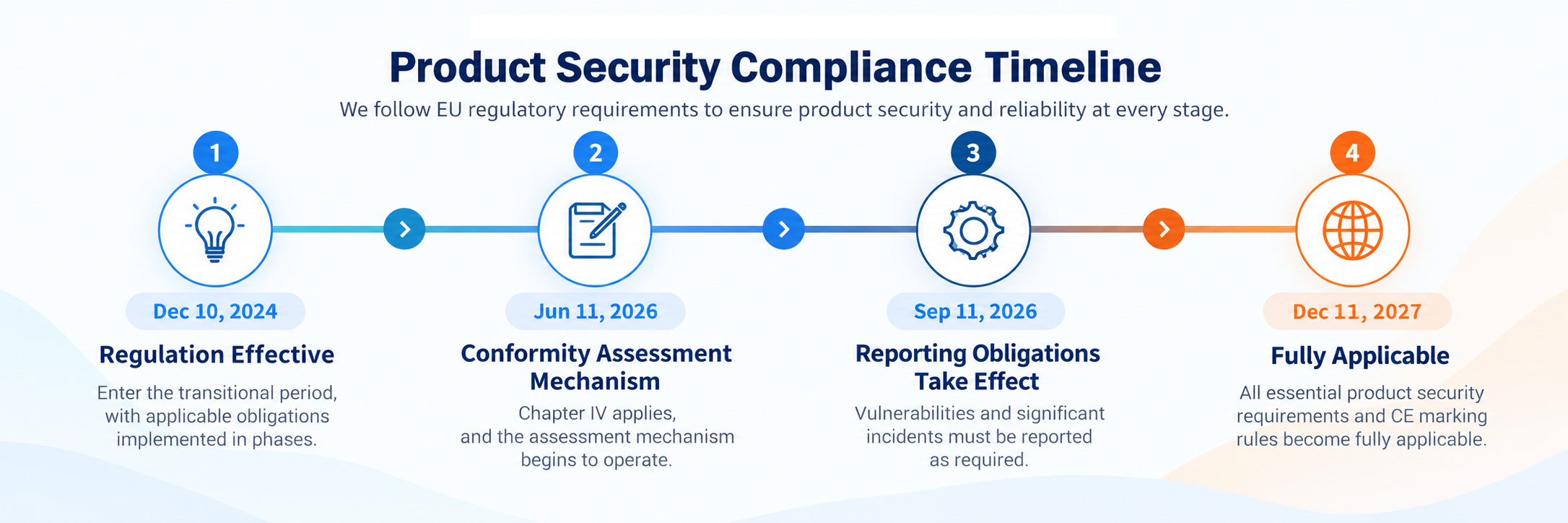
The CRA entered into force on 10 December 2024 and applies in phases:

On 27 July 2026, the European Commission published its first guidance on the application of the CRA. The guidance explains the interpretation of regulatory scope, substantial modification, support periods, reporting obligations, and risk assessment. It is a non-binding document and does not change the obligations or application timeline established by the regulation.

▌Reporting Obligations and Deadlines

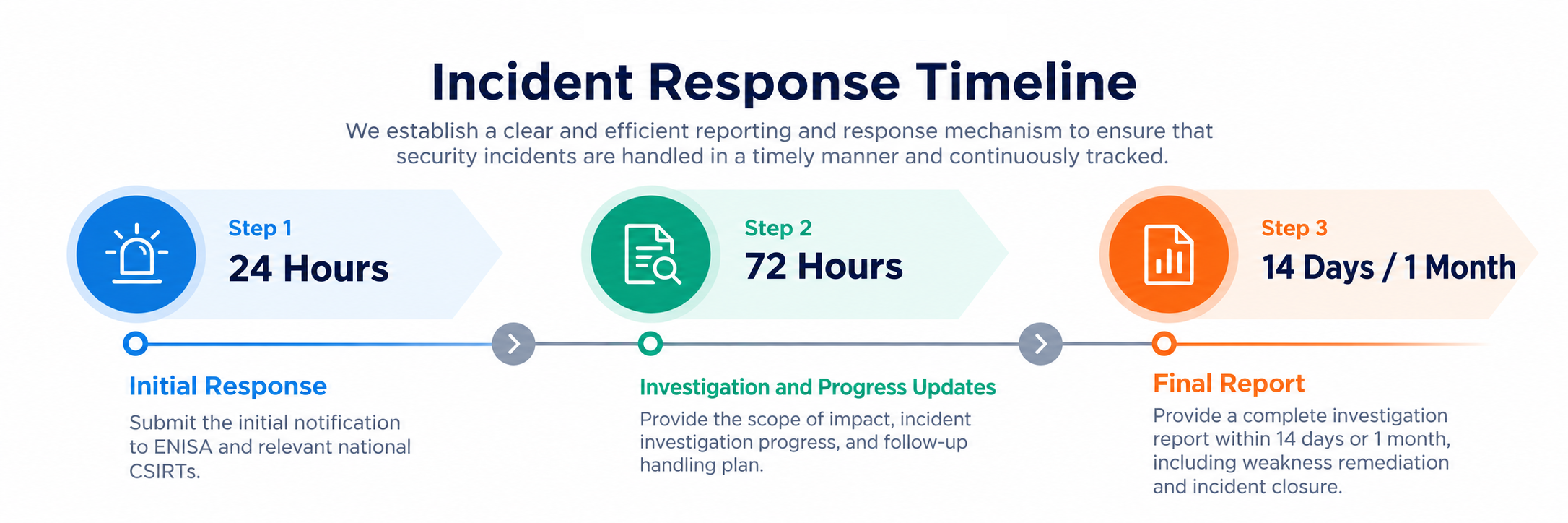
From 11 September 2026, manufacturers must report actively exploited vulnerabilities and severe incidents affecting product security through the prescribed channels. Reports are submitted through the EU reporting mechanism for distribution to ENISA and the relevant national CSIRT in accordance with the CRA. The reporting process follows three deadlines:

▌Product Classification and Conformity Assessment

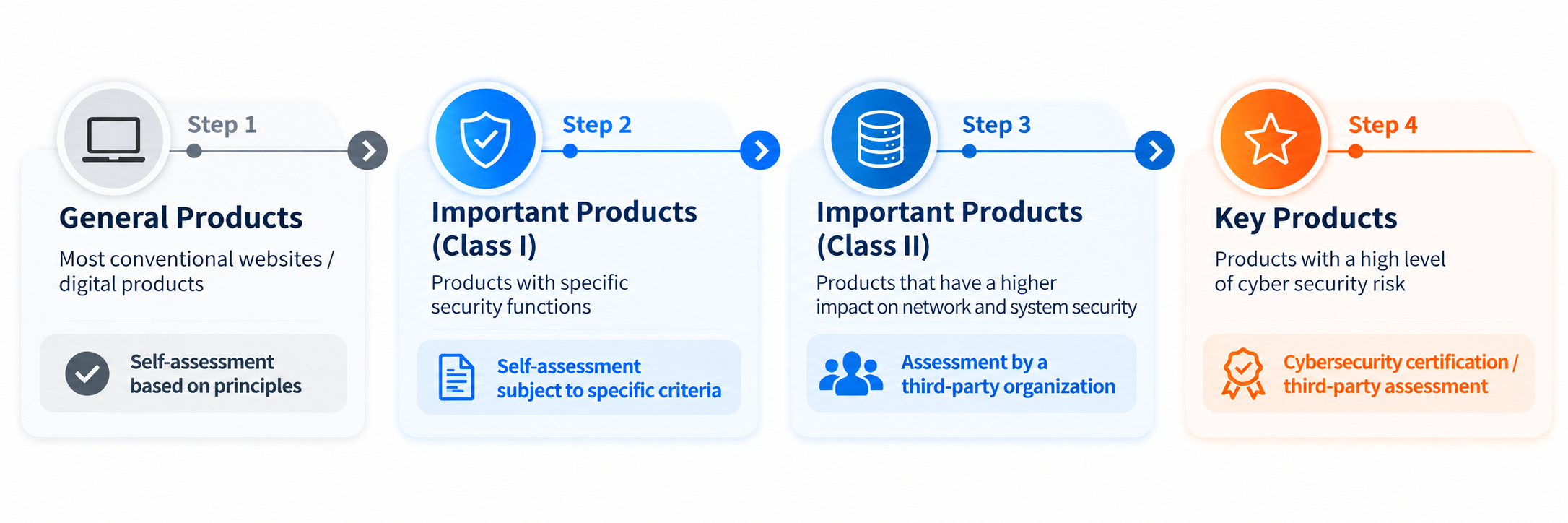
The CRA groups products according to cybersecurity risk. Classification determines the conformity assessment routes available for the product:

▌Roles in the Supply Chain

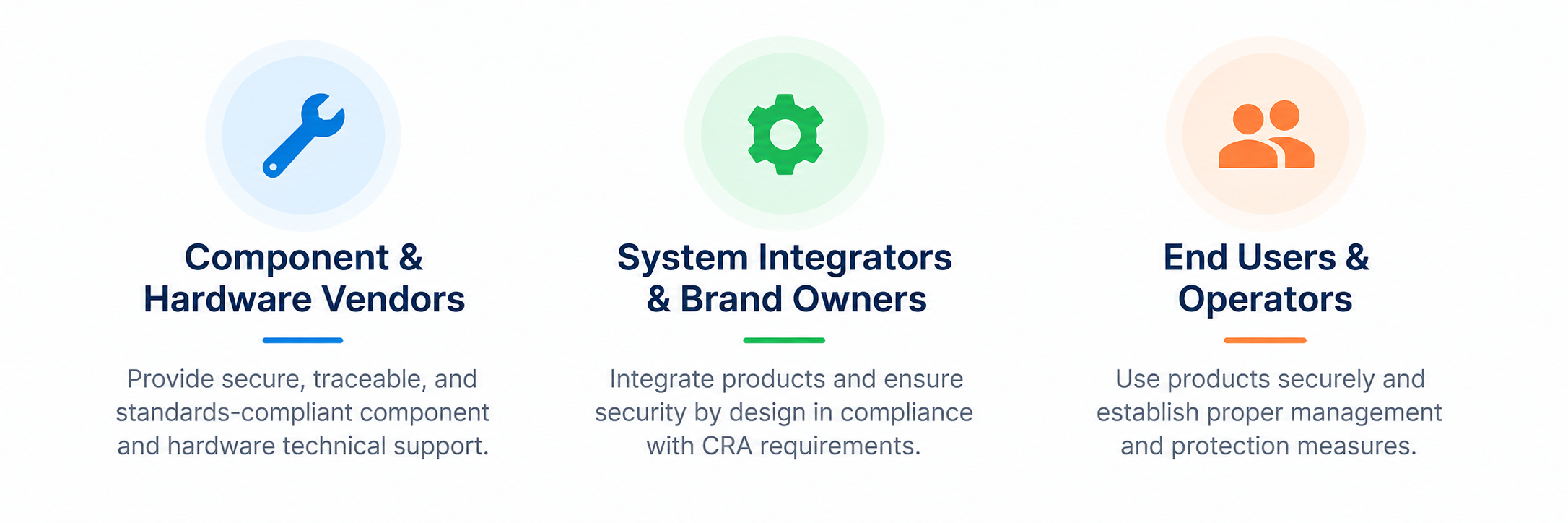
The CRA uses a shared-responsibility framework. A single product may involve several economic operators in the supply chain. Each party's role and obligations must be determined case by case based on the product form, delivery model, and the way the product is placed or made available on the market.

IBASE provides necessary technical information and security update support for the components and motherboards it supplies. We can also assist customers in discussing regulatory scope, product classification, and related documentation requirements. For product-specific discussions, contact your IBASE sales representative.

▌Key Manufacturer Obligations and IBASE's Approach

Key CRA ObligationIBASE Approach
  • Secure Design and Risk Assessment
  • Cybersecurity risk assessments must be conducted during the product design and production stages, and relevant records must be retained.
Conduct risk assessments and retain relevant records in accordance with the secure product development process.
  • Vulnerability Handling and Security Updates
  • Establish vulnerability handling procedures and provide security updates during the support period.
The PSIRT receives and handles vulnerability reports and releases updates according to the risk level.
  • Technical Documentation and Conformity Assessment
  • Prepare technical documentation and complete the conformity assessment required to obtain CE marking.
Prepare technical documentation according to the product category and adjust the preparation work based on the progress of standards development.
  • Incident and Vulnerability Reporting
  • Actively exploited vulnerabilities and major cybersecurity incidents must be reported within the prescribed time limits.
Establish reporting procedures and an external contact point in line with the September 2026 implementation timeline.
  • User Information Disclosure
  • Provide information such as the intended purpose, support period, and vulnerability reporting method.
Disclose support information and reporting channels in the product documentation and this dedicated section.


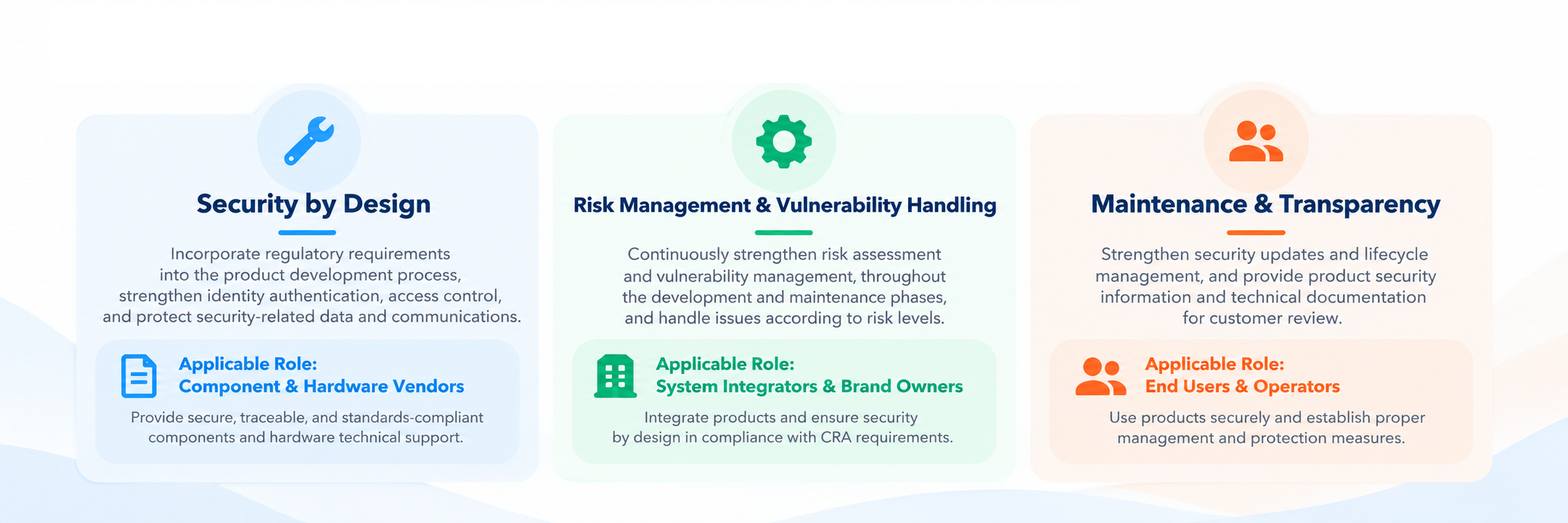
▌Product Cybersecurity Requirements

Each role has specific responsibilities to enhance product security and ensure regulatory compliance.

▌Relationship with Other Laws and Standards

Law or StandardPrimary Focus
CRA Regulation (EU) 2024/2847Products with digital elements, including obligations covering design, market placement, and the support period
NIS2 (EU) 2022/2555Organisational and network security management for critical infrastructure and essential or important entities
RED Delegated Regulation (EU) 2022/30 and EN 18031Cybersecurity, privacy, and fraud-protection requirements for relevant radio equipment
IEC 62443 seriesCybersecurity standards for industrial automation and control systems, including secure development processes and product capabilities


Vulnerability Reporting and Handling

The Product Security Incident Response Team (PSIRT) is the dedicated IBASE team responsible for receiving, assessing, and handling product cybersecurity vulnerability reports. When necessary, the PSIRT publishes security advisories and security updates and acknowledges receipt of a report. The handling method and completion schedule for each case depend on the severity of the vulnerability, the range of affected products, and the availability of feasible remediation measures.

▌How to Report a Vulnerability

If you discover a potential security vulnerability in IBASE Technology products, please email PSIRT@ibase.com.tw. To help us process and assess your report, please include relevant details in your email (such as the affected product model, firmware/software version, description of the vulnerability, and steps to reproduce it).

  • Contact information: Name, email address, region, country, and other relevant contact details.
  • Product information: Product model and version.
  • Vulnerability description: Technical details such as proof-of-concept code, attack method, and supporting documentation.
  • Potential impact: Possible attack scenarios and the scope of impact.


For security vulnerability reports and inquiries related to security advisories, please contact the Product Security Incident Response Team (PSIRT) at PSIRT@ibase.com.tw. For business matters such as requests for compliance documents, declarations, or component information, please contact our sales team using the details provided on the Contact Us page of the IBASE website. For product security updates and configuration issues, please contact our technical support team through the same webpage.


Completeness of submitted information: If a report does not include the information above, IBASE may be unable to reproduce the issue, determine the affected scope, assess the risk, or proceed with further handling. Submit complete information to help accelerate evaluation and remediation.

Security Advisories

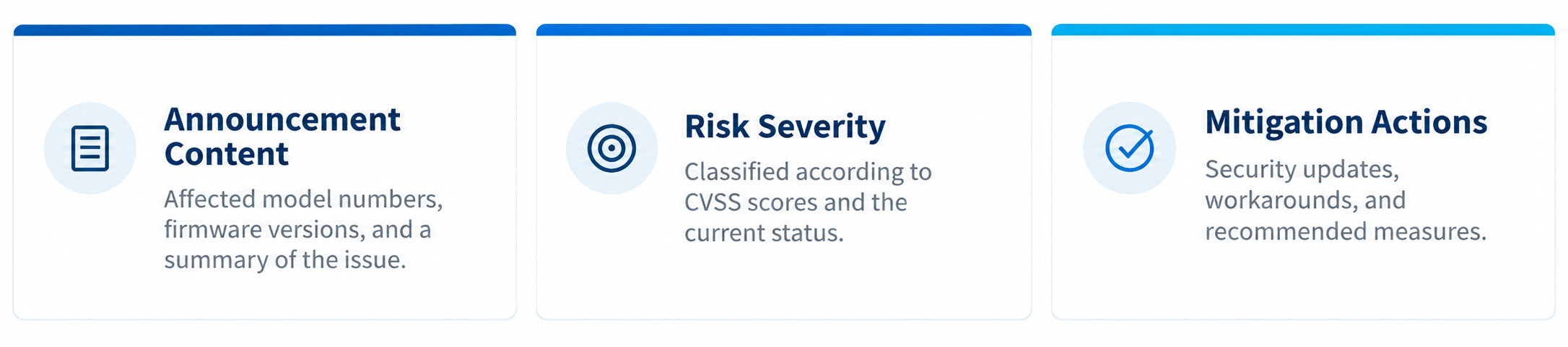
For confirmed cybersecurity vulnerabilities, IBASE will publish an advisory in this section and complete any required regulatory reporting. Each advisory may include:

Advisory ID Publication Date Affected Products Severity Status
                                                                                                                     No updates


Disclaimer: The information in this section is provided as is. IBASE determines the handling method and completion schedule based on vulnerability severity, the range of affected products, and feasible remediation measures. Results may vary by case. Content may be revised at any time, and the latest version published on this website prevails.

Frequently Asked Questions

▌Q: What products and activities does the CRA cover?

A: The CRA is Regulation (EU) 2024/2847. It establishes horizontal cybersecurity requirements for products with digital elements that can connect directly or indirectly to another device or network. Its requirements cover secure product design, vulnerability management, security updates, technical documentation, and reporting obligations.

▌Q: Which IBASE products may fall within its scope?

A: The assessment depends on whether a product has direct or indirect data connectivity and whether it is made available on the EU market. Unless covered by other sector-specific legislation, many IBASE industrial computers, embedded systems, and related software products may be within scope. Applicability to a specific model must be determined based on its functional configuration, delivery form, and sales region. Contact your IBASE sales representative to discuss a specific model.

▌Q: How are products classified, and what does classification affect?

A: The CRA divides products into the default category, important products Class I, important products Class II, and critical products. Important and critical products are listed in Annexes III and IV. Classification determines the available conformity assessment route; higher-risk classes generally require greater third-party involvement.

▌Q: What are harmonised standards, and what is their current status?

CEN, CENELEC, and ETSI develop harmonised standards in response to the European Commission's standardisation request. These standards translate the CRA's essential requirements into verifiable technical specifications. CRA-related horizontal and product-specific standards remain under development and review, and their publication status should be checked against the latest EU notices.

▌Q: When do the reporting obligations begin, and what are the deadlines?

A: The reporting obligations apply from 11 September 2026. After becoming aware of an actively exploited vulnerability or a severe incident, a manufacturer must submit an early warning within 24 hours and a notification within 72 hours. A final report must then be submitted after remediation of the vulnerability or completion of incident handling, within the applicable regulatory deadline.

▌Q: Does the CRA apply to products already on the market?

A: The CRA contains transitional provisions for existing products. The essential requirements generally apply to products placed on the market after the full application date or to products that undergo a substantial modification after that date. Reporting obligations have a separate application date and also cover products already made available on the Union market. The actual determination must be made case by case based on market placement and subsequent changes.

▌Q: What may constitute a substantial modification?

A: A modification may be substantial when it changes a product's intended purpose or may affect its compliance with the essential cybersecurity requirements. Such a product may be treated as newly placed on the market. The nature and impact of the modification must be assessed case by case.

▌Q: What are the consequences of non-compliance with the CRA?

A: Authorities may require corrective action and may impose market measures such as withdrawal or sales restrictions. For infringements of essential cybersecurity requirements or key manufacturer obligations, administrative fines may reach EUR 15 million or 2.5% of total worldwide annual turnover for the preceding financial year, whichever is higher. Lower maximum fines apply to certain failures to provide information or cooperate with authorities.

▌Q: How do the CRA, NIS2, EN 18031, and IEC 62443 differ?

A: The CRA regulates products with digital elements. NIS2 addresses organisational cybersecurity management for critical infrastructure and essential or important entities. EN 18031 supports relevant requirements for radio equipment. IEC 62443 is a family of technical standards that can support secure development processes and product security capabilities. They serve different purposes and do not replace one another.

▌Q: What is IBASE's role under the CRA?

A: Many IBASE products are components or motherboards intended for integration. The party that places the final product on the EU market under its own name or trademark is generally the manufacturer under the regulation and assumes the corresponding obligations. Roles depend on the actual transaction and market placement model. IBASE can assist customers in discussing their product architecture.

▌Q: What cybersecurity foundations and certifications does IBASE currently have?

A: IBASE is certified to ISO 27001 for its information security management system. It has also established a secure product development lifecycle in accordance with IEC 62443-4-1 and obtained certification. Implementation of relevant IEC 62443-4-2 requirements is being planned. Certificates are available in the Certificates and Compliance Documents section.

▌Q: Does IBASE provide an SBOM, and what happens if a supplier cannot provide one?

A: IBASE has established software bills of materials for its products and evaluates the method and scope of disclosure based on customer requirements and confidentiality conditions. IBASE generally requires suppliers to provide an SBOM for third-party components. If a complete SBOM cannot be provided, the supplier must provide alternative information sufficient for component identification, vulnerability analysis, and risk assessment. IBASE then assesses whether the component may be adopted.

▌Q: How can I report a cybersecurity vulnerability or request compliance documents?

A: Email cybersecurity vulnerability reports to PSIRT@ibase.com.tw and include the information listed in this section. For compliance documents, declarations, and component-related information, contact your IBASE sales representative.

About IBASE

Reliability

In house electrical, mechanical and thermal design with hardware/software reliability & compatibility validation.


Longevity

To ensure long-term supply, high-quality components are sourced with effective product lifecycle management.

Performance

Leverages the latest solutions from Tier 1 processor vendors to ensure high levels of computing performance.


Serviceability

Provides comprehensive after-sales services and technical support to ensure complete customer satisfaction.

February 2000

Founded

Taipei, Taiwan

Headquarters

TPEx 8050

Stock Code

IBASE会員に登録していただくと、会員ページより製品のテストレポート・認証ドキュメント・2D/3D図面及びMTBFレポートなどの資料をダウンロードすることができます。 新規会員登録はこちら。